The phrase usually arrives at a parent-teacher interview.
Sometimes it's wrapped in something softer. "He's lovely, but…" Or "She's very capable, however…" Sometimes the teacher doesn't say it at all. They just hand over a report card, and you read between the lines.
Too distracted.
Too fidgety.
Too sensitive.
Too much.
You go home and replay the conversation. You wonder if you've been doing something wrong. You wonder if your child needs to try harder. You wonder if they'll grow out of it.
If you've had that drive home, this piece is for you.
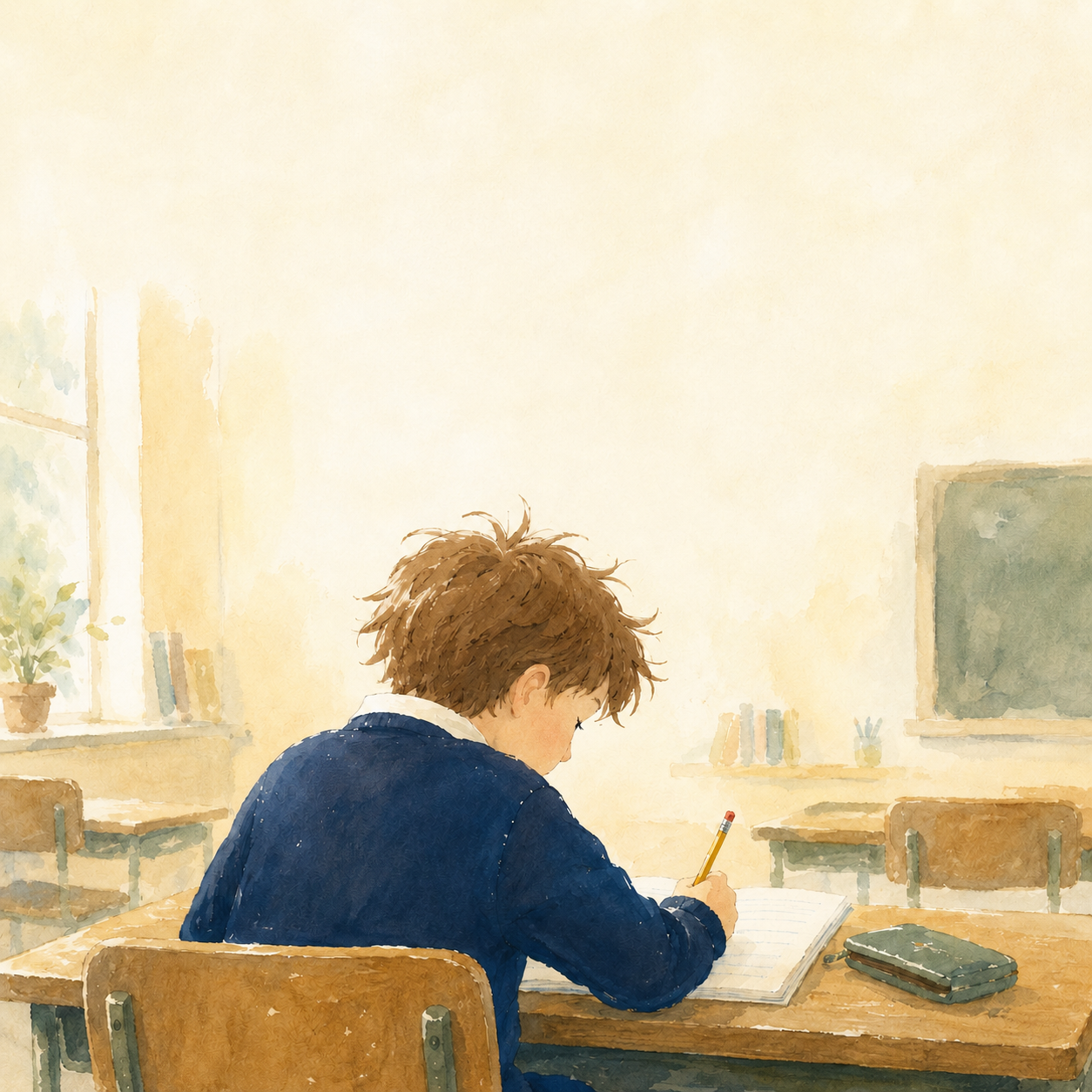
Our son Blake was a quiet C student in English.
He was never disruptive. He was well behaved, sat where he was told, did the work that was put in front of him. He just couldn't quite keep up. He fidgeted. He got distracted easily. He couldn't follow a two-step instruction without losing the second step somewhere along the way.
At school, none of this raised alarm bells. He was compliant enough to keep moving through the year levels. His maths was strong, his English wasn't, and his teachers treated this as one of those things kids grow into. He slid under the radar.
It wasn't until we pulled the kids out to travel Australia that we started seeing what school had missed.
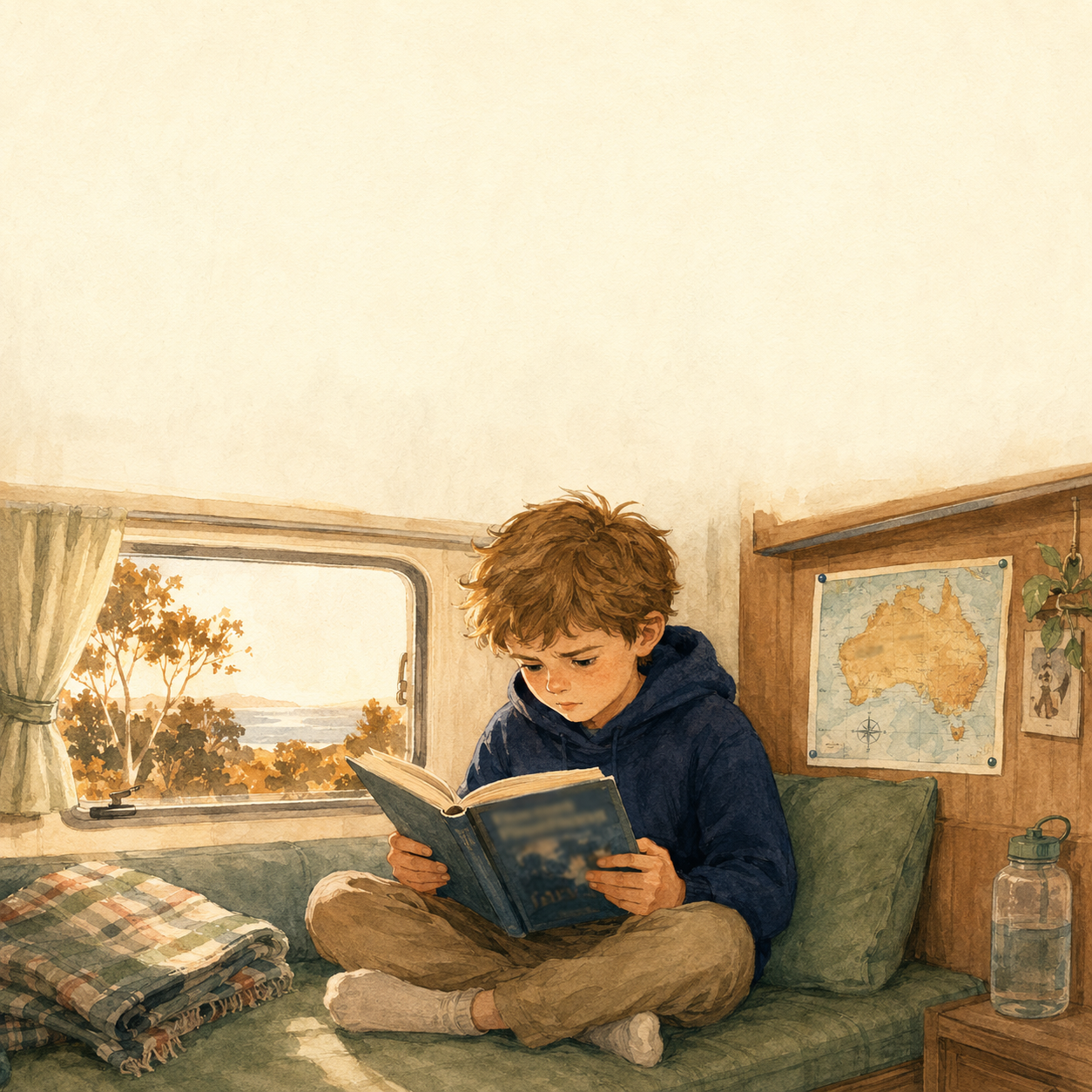
When you're in a caravan with your child every day, watching them try to read at the kitchen table, watching them write a sentence over and over until they're satisfied with the spelling, watching them work twice as hard as their siblings for half the result, you see things you don't see in a parent-teacher interview.
We saw the dyslexia.
We saw the patterns we now recognise as ADHD.
Neither had been picked up at school. He wasn't naughty enough to be flagged. He wasn't failing badly enough to be assessed. He was simply a quiet boy with a soft C average, getting by.
There's a specific kind of struggle that happens to kids like Blake. The system doesn't fail them dramatically. It fails them quietly.
They sit in classrooms designed for a particular kind of brain. Their brain doesn't quite work that way, so the work takes longer, feels harder, lands less well. They get labels. Distracted. Needs to focus. Could try harder. Daydreams during lessons.
The labels become how they describe themselves. I'm not good at reading. I'm slow at writing. I just can't sit still.
The truth is almost always the opposite. The child who fidgets in class is often the one whose body needs movement to focus. The child who's "too sensitive" is often the one taking in more information from their environment than the system is built to handle. The child who can't sit through a 45-minute lesson is often the one who can hyperfocus for three hours on a topic that fascinates them, given the chance.
The system isn't designed to see this. It's designed to deliver standardised curriculum to standardised learners. When a child doesn't fit the standard, the system describes the child as the problem, not the design.
Your child has never been the problem.
We started home schooling Blake with pre-made workbooks. The same generic worksheets for his year level. The same approach school had been running, just done from our kitchen table.
Within weeks, we threw them out.
We taught down a grade and rebuilt his fundamentals. We made learning a game. Family writing competitions where we'd compete to write the neatest sentence. Maths warm-ups while kicking a soccer ball back and forth. Dyslexia font loaded onto the Kindle so he could read for pleasure without the letters fighting him.
Every task was broken into small enough steps that he could see the next move clearly. Every win, however small, was visible. Every interest he had, soccer, ancient history, the ocean, the questions about how things worked, became a doorway into a learning unit.
We wrote his program around how his brain actually worked, not around how a generic Year 5 brain was supposed to work.
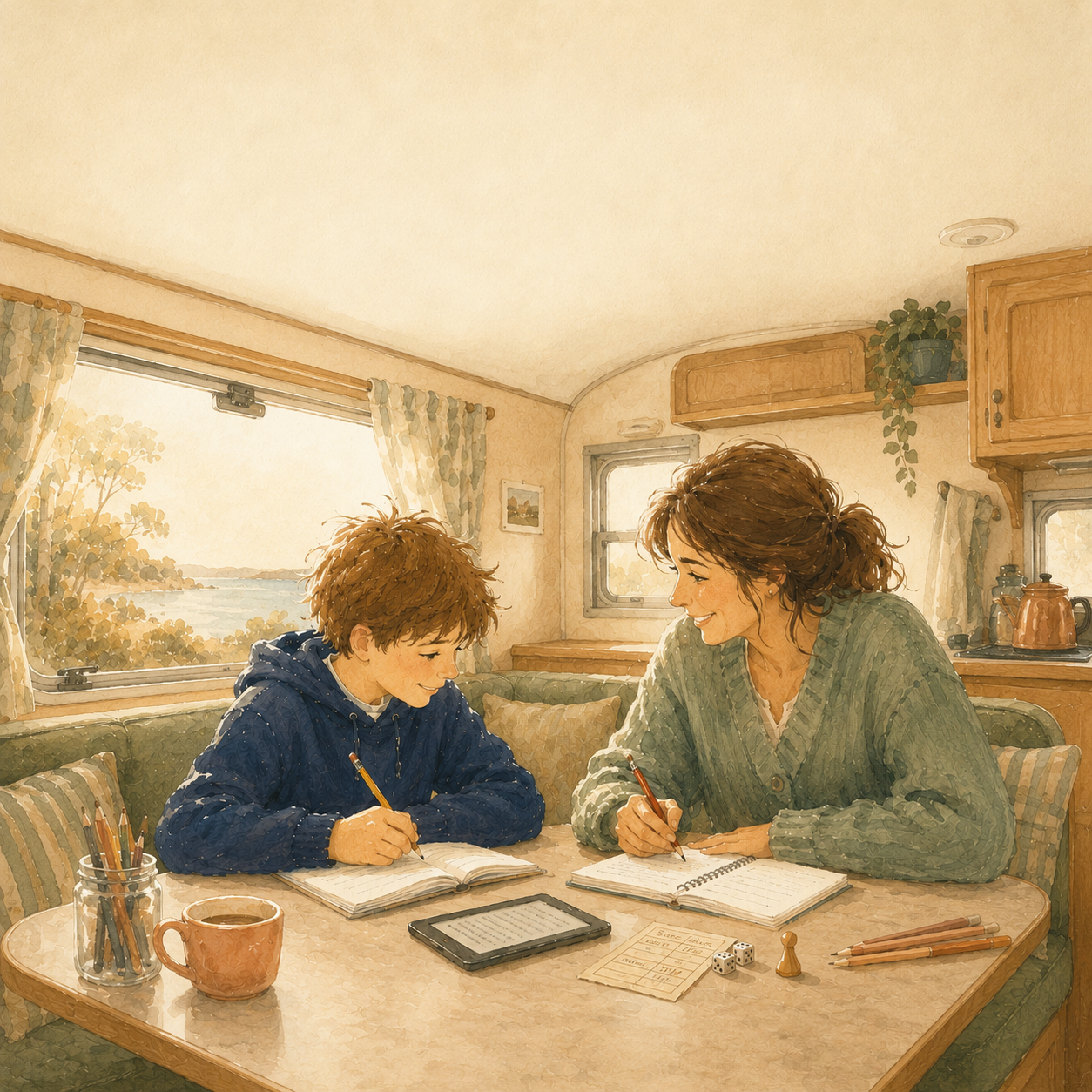
It took about eighteen months for him to catch up. Then it took another six months for him to start moving ahead.
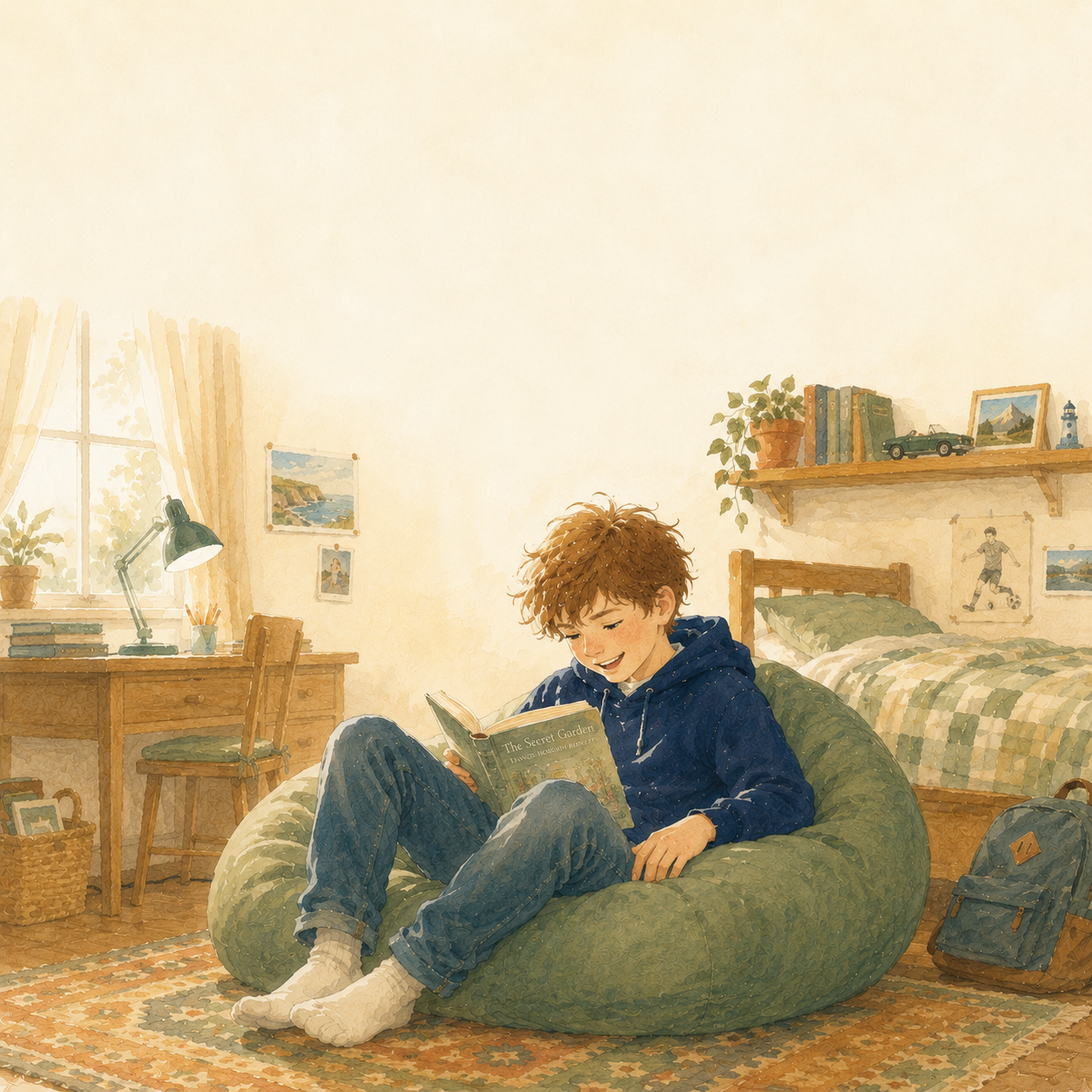
Blake is now back in mainstream high school. He's earning A's in English. He won an academic excellence award.
He was never the problem. The program was.
When we needed a home education program for Blake, we couldn't find one that worked the way his brain worked.
Every option we looked at was a pre-made template with a space for his name. Same activities, same pace, same approach. Nothing that adapted to a child who had dyslexia, ADHD traits, a passion for engineering, and a brain that needed building blocks before it could see the bigger structure.
So we built one ourselves.
Apply-ED writes personalised home education programs for children the system has missed. We ask the questions no template asks. How does your child show they're overwhelmed? What's a special interest we could build a whole learning unit around? What time of day does their brain work best? What's the support that's helped most so far?
Every plan is aligned to the Australian Curriculum and state specific needs. Every plan is editable and written for your specific child.
We do this for ADHD kids. For autistic kids. For dyslexic and dysgraphic kids. For twice-exceptional kids. For kids who've never quite fit the box school was built around.
We do it because someone needed to build it for Blake.
If your child has been called too much, too distracted, too sensitive, too anything, your child has never been the problem.
The system was built for a particular kind of brain. Children whose brains don't match that shape get labelled. The labels stick. The kids start to believe them. And the parents start to wonder if they've done something wrong.
You haven't.
If any of this sounds familiar, if you've sat in your car after a parent-teacher interview and felt that specific kind of grief, if you've watched your child come home from school smaller than they were when they left, we'd love to hear from you.
We don't have a magic solution. We have a program built for one child at a time, written by parents who needed it to exist.
If your child is somewhere in this story too, we'd love to meet them.
apply-ed.com.au/create-program
No obligation. No submission on your behalf.