
If you've landed here, there's a good chance you already know what doesn't work.
The desk and the worksheet. The forty-minute lesson block. The reward chart that worked for a week and then stopped. The morning where you ask your child to read one page and three hours later you're both in tears about it.
You're not doing it wrong. The model you've been given was never going to work for this child.
This is what we've learned about home educating ADHD kids, written for the parents at the start of the journey and for the ones who've been doing it for a while and still feel like they're improvising every day.
The single most useful shift we've seen in home educating ADHD children is the one that happens when a parent stops trying to make their child concentrate the way other children concentrate.
ADHD isn't a deficit of attention. It's a different way of regulating it. Your child can absolutely focus, often more intensely than a neurotypical peer. The challenge is that the things they focus on are not always the things on the curriculum, and the focus doesn't switch on or off when an adult asks it to.
If you've ever watched your ADHD child spend four hours building something complicated, then refuse to spend four minutes writing a sentence, you already know this. The capacity for sustained attention is there. The conditions that activate it are different.
Home education gives you something school cannot: the freedom to design the conditions around the child, not around a timetable.
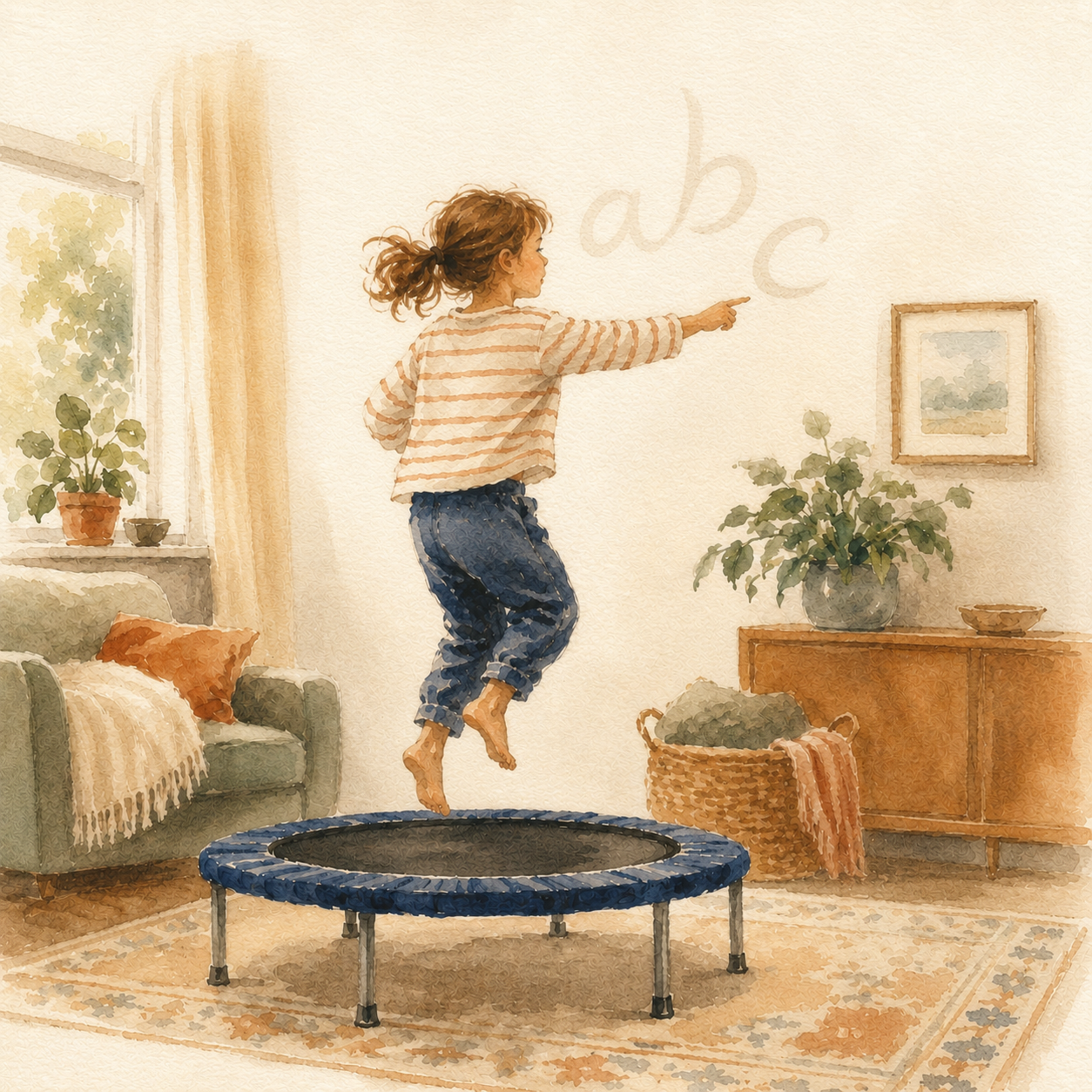
This is the rule we come back to most often.
For a lot of ADHD children, sitting still and concentrating are not compatible activities. Asking the child to do both at once is asking them to spend so much energy regulating their body that there is nothing left for the work. The child looks like they're not learning. What's actually happening is the child is using everything they have just to look like they're paying attention.
Take movement away from the work and the work gets harder. Build movement into the work and the work becomes possible.
In practice this looks like:
None of this is a workaround. It's not an accommodation. It's the actual learning condition this child needs. The desk was the problem. Not the reading.
A typical school lesson runs for 30 to 60 minutes. For most ADHD children, that's two to three times longer than their natural concentration block. By the time the lesson ends, they've been struggling for most of it.
Home education lets you work in blocks that match your child's actual attention rhythm. For many ADHD kids that's 10 to 20 minutes of focused work, then a complete reset. Not a sit-still break. A real change of state. Run around the garden. Build something. Eat something. Then come back.
Choice matters more than parents are usually told.
Inside any given week there are subjects you have to cover. But within a subject, your child can often choose what to read, what to write about, which problem to solve first. ADHD brains run hot when they have agency and stall out when they don't. The child who refuses to write a paragraph about the rainforest will often happily write three about the sharks they're currently obsessed with. The writing skill is the same. The motivation is the entire difference.
A few honest things to say.
Reward charts and sticker systems usually don't work for ADHD children. They rely on the child being able to see a delayed reward and shape their behaviour around it. Most ADHD kids cannot sustain that calculation for more than a day or two. The system breaks, the parent feels like they've failed, the child internalises the failure. Skip the reward chart.
Long task lists are counterproductive. A list of ten things to do today reads to an ADHD child as overwhelming before they've started one of them. Two or three things at a time, written somewhere visible, is the working ceiling.
Sitting through a structured curriculum that was designed for a classroom of 25 children does not magically work better in a kitchen. If your child wasn't thriving in school with that material, the same material delivered at home will not solve the problem. The format is the problem, not the location.
Punishing the child for not concentrating makes everything worse. This sounds obvious but it is one of the most common patterns we see in parents who have just pulled their child out of school. The school's frustration becomes the parent's frustration. The child has not changed. The setting has.
A program that works for an ADHD child is not the same program with a few adjustments. It's a different shape.
When we write a plan for an ADHD child at Apply-ED, we don't start with the curriculum and bolt on accommodations. We start with the child. How do they actually focus? What do they care about? Where does their concentration crash? What time of day is their best window? What activities make them feel competent, and which ones make them feel like a problem?
Then we build a plan that puts the learning into the conditions where this child can actually do it. Movement-led lessons where movement helps. Choice built in where choice matters. Short blocks. Real interests. Subjects taught through the things the child already wants to think about.
It's still ACARA aligned. It still covers the same learning outcomes any Australian home ed regulator wants to see. It just gets there by a different route, because this child needs a different route.
If you're trying to home educate an ADHD child without a plan that's been written for them specifically, you are doing the hardest job in home ed.
You're improvising every morning. You're picking subjects and trying to make them fit. You're cycling through curriculums looking for the one that finally works. You're reading forum posts at midnight. You're carrying the whole load of knowing what your child needs and the whole load of delivering it, every day.
It is a lot.
A plan doesn't take that work away. You still know your child better than anyone else can. But a plan gives you a structure to work inside, written for how your child actually learns, so the daily decisions get smaller and the underlying shape of the week is already sorted.
Apply-ED writes personalised home education programs for Australian families. Every program is built for one child, around the way that child actually learns.
For ADHD learners, that means:
The program is delivered as an editable Word document within two business days of intake. The cost is $195 per child. There is no subscription, no ongoing commitment, and the plan is yours to keep, change, and use however your family needs.
If you'd like to talk about your specific child before deciding anything, that conversation is where every Apply-ED plan starts. We do that first, then we write.
The child you're trying to home educate is not behind. He has been told to sit still since he was five. She has been told to wait quietly while the rest of the class catches up. They have been managed instead of taught.
You're not going to fix that with another curriculum.
You might fix it with a plan written for the child you actually have.
No obligation. No submission on your behalf.